
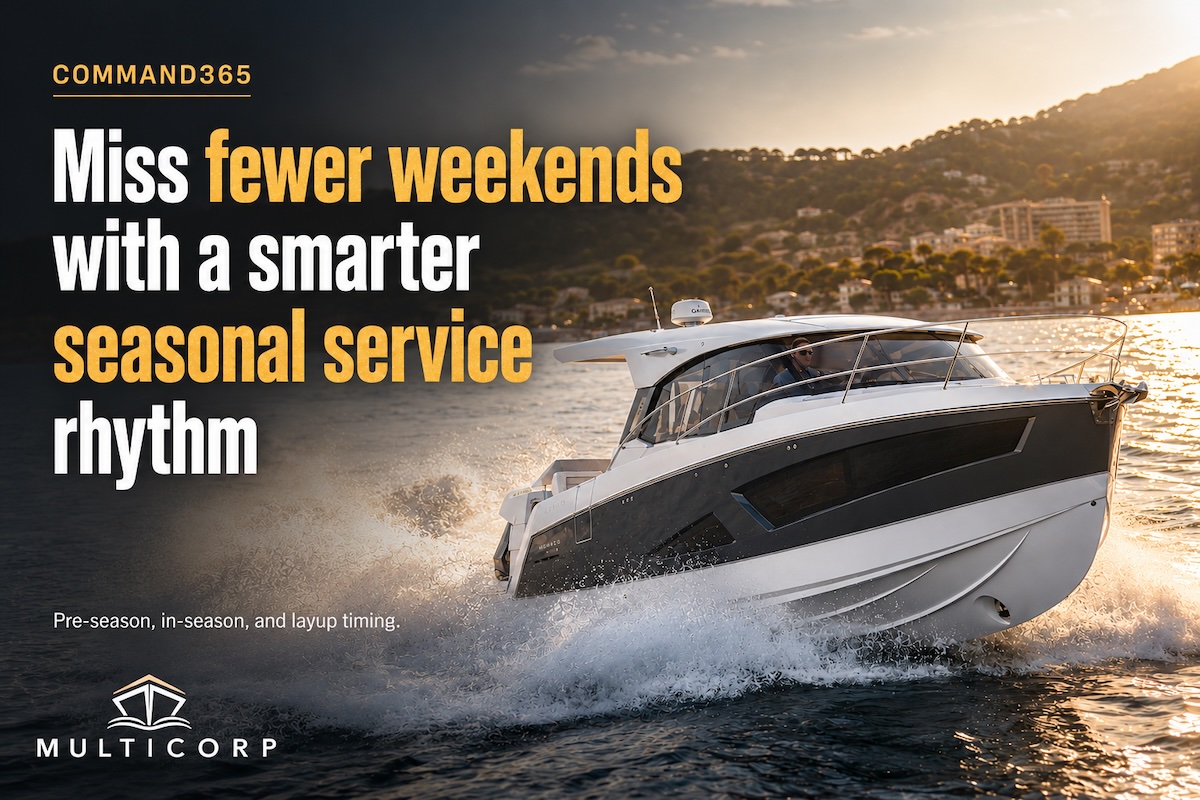
A Seasonal Outboard Service Calendar for Mid‑Atlantic, Northeast & Great Lakes Boaters
Efficient, reliable outboards don’t happen by accident. They’re the result of a simple, consistent plan that fits your waters, your climate, and how you actually use your boat.
For Skamander by Parker Poland owners in the Chesapeake Bay, Mid‑Atlantic, Northeast, and Great Lakes regions, that means planning around real seasons: spring commissioning, an active summer and fall, and either year‑round use or layup. The calendar below maps out proactive tasks that reduce surprises, protect your investment, and keep you on the water when it counts—while naturally aligning with MultiCorp Marine’s Command365 ownership support.
Late Winter / Early Spring: Pre‑Season Readiness
Timing: February–April
Regions: Chesapeake Bay, Mid‑Atlantic, Northeast, Great Lakes
This is when you prevent 80% of in‑season headaches. Whether you boat on the Chesapeake, Lake Michigan, or an inland lake in Pennsylvania or Texas, use this window to move deliberately—not rushed.
1. Engine & Fuel System
-
Inspect and test batteries
- Clean terminals, check electrolyte (if applicable), and load‑test.
- Replace weak batteries before they strand you at the dock.
-
Review fuel system
- Inspect fuel lines and primer bulbs for cracks or stiffness.
- Confirm no fuel leaks at connections, filters, and tanks.
- Replace water‑separating fuel filters if due or after a storage period.
-
Confirm correct engine oil & gear lube
- Verify last change date and hours; change if in doubt.
- Look for milky gear lube (water intrusion) and address immediately.
2. Cooling & Controls
-
Water pump / impeller check
- Confirm strong tell‑tale stream on muffs or in a test tank.
- Follow manufacturer intervals for impeller replacement—do it early, not when it fails.
-
Steering and controls
- Inspect steering ram, helm, and cables or hydraulics for smooth movement.
- Lubricate linkages and check throttle/shift for positive engagement.
-
Propeller & lower unit
- Remove prop, inspect for fishing line around the shaft.
- Check for nicks and bends; repair or replace damaged props.
3. Electrical & Electronics
-
Navigation and safety electronics
- Test GPS, chartplotter, VHF, radar (if equipped), and horn.
- Verify bilge pumps and float switches operate automatically and manually.
-
Lighting
- Confirm navigation and anchor lights meet legal requirements.
- Replace corroded or waterlogged fixtures before they fail at night.
Command365 alignment: Many of these checks can be scheduled in a coordinated spring review, so parts, service windows, and any warranty work are handled before the rush.
Spring Commissioning: Boat Systems & Comfort
Beyond the outboard, a premium European boat like a Skamander by Parker Poland has systems that deserve equal care.
1. Hull & Deck
- Wash and inspect the hull for blisters, cracks, or damage.
- Refresh bottom paint where applicable (Chesapeake Bay, coastal Mid‑Atlantic, Great Lakes marinas).
- Check rub rails, cleats, bow rails, and hardware for loose fasteners.
2. Systems Check
-
Freshwater and sanitation
- Flush and sanitize freshwater tanks and lines.
- Test marine heads, macerators, and holding tank vents.
-
Cabin and pilothouse
- Inspect doors, hatches, seals, and windows for leaks.
- Test wipers, defrosters, heaters, and air conditioning where equipped.
3. Safety Gear
- Update flares, verify fire extinguishers are charged and compliant.
- Inspect life jackets, throwable devices, and first‑aid kits.
- Review Coast Guard requirements for your area (Chesapeake Bay, Great Lakes, inland lakes, and coastal waters each have nuances).
In‑Season: Routine Care for Reliable Outboards
Timing: May–September (or year‑round in milder markets like Florida and Texas)
Once you’re running regularly—whether cruising Annapolis, fishing the Jersey shore, or exploring Michigan’s inland lakes—short, consistent habits will keep your outboards efficient and dependable.
1. After Every Trip
-
Flush with fresh water
Even if your Skamander lives in brackish Chesapeake water or the Gulf Coast, a thorough flush extends pump, thermostat, and cooling system life. -
Visual walk‑around
- Look for fuel, oil, or gear lube drips.
- Check prop and skeg for new damage.
- Confirm engine mounting bolts remain tight.
2. Weekly or Every 10–20 Hours
- Check engine oil level and color.
- Inspect fuel‑water separator (drain or replace if contaminated).
- Spray a light corrosion inhibitor on exposed metal in salt or brackish environments.
- Test bilge pumps and float switches—especially in rainy Mid‑Atlantic and Great Lakes seasons.
3. Monthly or Every 50 Hours
-
Review engine data (if your boat is equipped with digital engine monitoring):
- Fuel burn trends, temperatures, hours at various RPM.
- Early changes in performance can signal minor issues before they become major.
- Clean battery terminals and perform a quick voltage check.
- Inspect steering system for play or stiffness.
Command365 alignment: Ongoing service coordination helps you schedule interval services, track running hours, and handle warranty items without losing prime boating weekends.
Late Season: Fall Strategies for Two Types of Owners
Timing: September–November
Regions: Mid‑Atlantic, Northeast, Great Lakes, and inland lakes
How you manage fall depends dramatically on whether you use the boat year‑round or lay up for winter.
For Year‑Round and Shoulder‑Season Users
This is common in the Chesapeake Bay, coastal Virginia, Delaware, New Jersey, some inland lakes, and milder markets like Texas and parts of Florida.
-
Fuel system discipline
- Keep fuel fresh; avoid letting tanks sit low and accumulate moisture.
- Use manufacturer‑approved fuel stabilizer if the boat might sit for weeks.
-
Cold‑weather checks
- Verify batteries are healthy and fully charged—cold starts are harder on them.
- Monitor that thermostats and temp readings are normal in colder water.
-
Storm and freeze planning
- Have a plan for unexpected hard freezes and nor’easters: haul‑out options, extra dock lines, and fendering.
For Winter Layup & Storage
Common across the Northeast, Great Lakes, and colder inland lakes.
-
Stabilize and protect
- Add stabilizer to fuel and run the engine long enough to distribute it.
- Change engine oil and gear lube before storage to avoid overwintering contaminants.
-
Cooling and corrosion
- Perform manufacturer‑recommended winterization, including fogging where applicable.
- Thoroughly flush with fresh water; in freezing climates, protect systems with appropriate antifreeze.
-
Systems & interiors
- Winterize freshwater systems, heads, and washdowns.
- Dry out compartments, remove soft goods, and use ventilation or dehumidification to prevent mold.
-
Hull & storage
- Inspect and repair minor hull or gelcoat damage now.
- Choose quality shrink‑wrap or covered storage, especially in snow‑prone Great Lakes and Northeast marinas.
Command365 alignment: A structured layup checklist and coordinated service appointments ensure your outboards and systems are fully protected through the off‑season and ready for an efficient spring start‑up.
Turning a Service Calendar into Stress‑Free Ownership
The most reliable outboards and the most enjoyable boats—whether pilothouse models, family cruisers, fishing platforms, or day cruisers—belong to owners who treat maintenance as a manageable routine instead of a series of emergencies.
A simple seasonal framework:
- Pre‑season: Inspect, service, and confirm readiness before launch.
- In‑season: Short, regular checks to catch small issues early.
- Fall: Make a deliberate choice between year‑round use and layup, and prepare accordingly.
At MultiCorp Marine, we designed our Command365 program around this rhythm. For qualifying Skamander by Parker Poland owners, we help coordinate service, guide maintenance decisions, manage warranty needs, and provide dockside support—so your calendar is focused on weather windows, family schedules, and fishing tides, not repair backlogs.
If you’re planning your next season on the Chesapeake Bay, Great Lakes, or any major inland or coastal market and want a premium outboard‑powered boat backed by practical, owner‑focused support, we’re here to help.
Contact MultiCorp Marine to discuss your boating plans and build a proactive ownership plan that keeps you confidently on the water.