
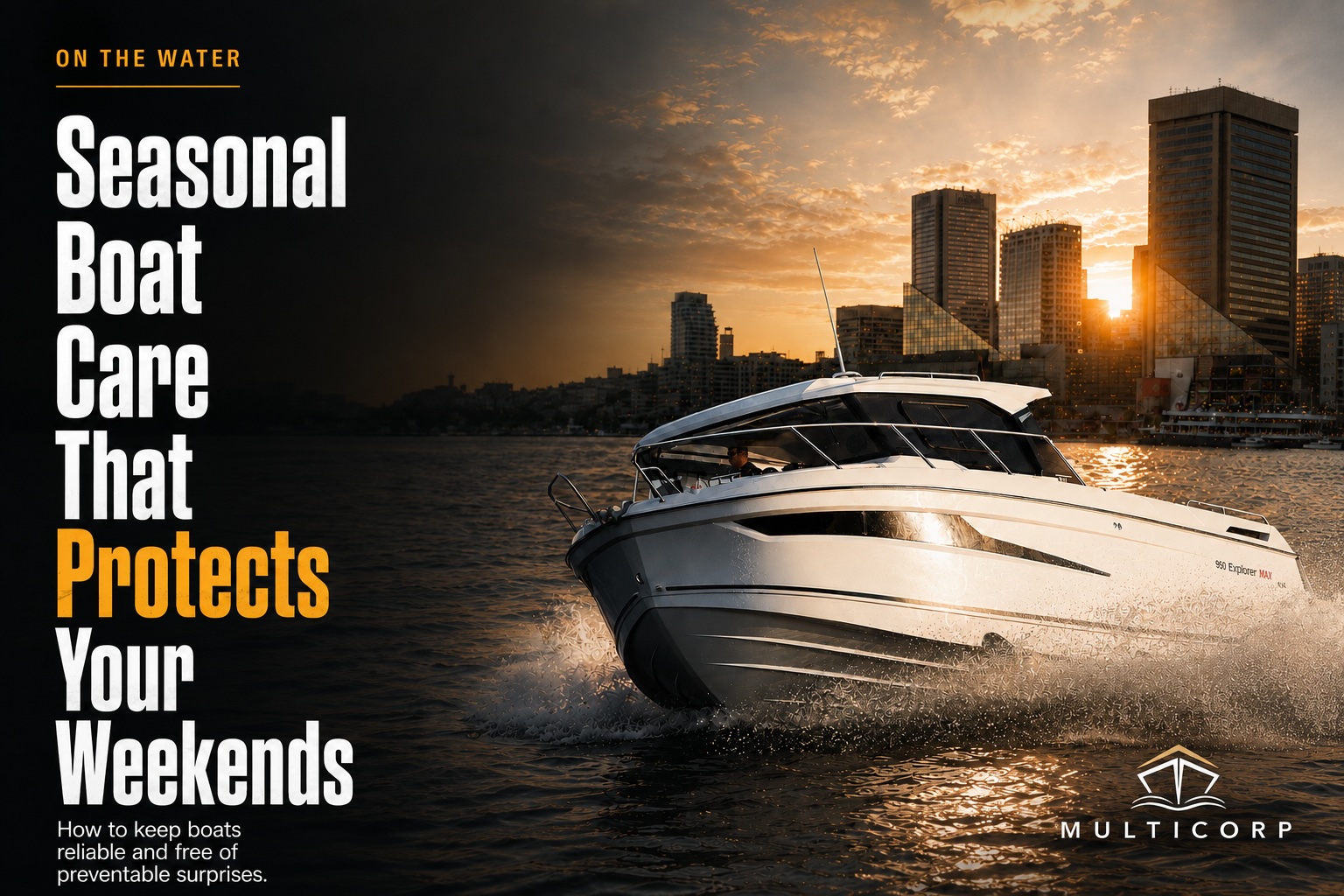
A Practical Seasonal Game Plan for Chesapeake Bay & Mid‑Atlantic Boat Owners
Busy careers and full calendars don’t leave much room for service delays or mid‑season surprises. If you run your boat on the Chesapeake Bay, the Mid‑Atlantic coast, or major inland lakes, a clear seasonal game plan can be the difference between spontaneous weekends on the water and weekends spent waiting on a technician.
This guide outlines a practical, owner-focused schedule for:
- Spring commissioning and launch timing
- Storm and weather readiness
- Fuel and filter care for modern outboards
- Smart winterization choices
The goal: a reliable boat, predictable maintenance, and more uninterrupted time on the water.
1. Spring Commissioning: When to Wake the Boat Up
In Maryland, Virginia, Delaware, New Jersey, Pennsylvania, and similar Mid‑Atlantic climates, the real decision isn’t whether to commission—it’s when.
Target Timing
-
Chesapeake Bay & Mid‑Atlantic:
- Plan commissioning for late March to late April depending on your tolerance for chilly days.
- Aim to be fully operational by early May, before the pre‑Memorial Day service rush.
-
Great Lakes & Northern inland lakes (e.g., Michigan):
- Commissioning often runs late April through late May.
- Hard rule: wait until consistent nighttime temps stay above freezing.
Key Commissioning Priorities for Modern Outboards
Whether you run a Skamander by Parker Poland pilothouse, family cruiser, or day boat, your checklist is similar:
-
Batteries and electrical
- Test batteries under load; replace anything marginal before the season.
- Clean and tighten terminals; confirm your charging system is healthy.
-
Fuel system
- Inspect fuel lines, primer bulb, and connections for cracking or softness.
- Replace water‑separating filters if they weren’t done at layup.
- If the tank wasn’t full over winter, plan for extra attention to water and contamination checks.
-
Engine start‑up
- Confirm proper outboard water flow (strong, steady telltale).
- Verify oil level and change interval (hours and calendar time both matter).
- Confirm any manufacturer software updates or bulletins are addressed.
-
Safety & systems
- Check navigation lights, horn, bilge pumps, and float switches.
- Review expiration dates on flares and fire extinguishers.
- Test electronics and update charts if you run Chesapeake Bay or coastal routes.
For busy owners, the best approach is to lock in a recurring annual commissioning slot with a trusted partner before the prior season ends. Through MultiCorp Marine’s Command365 program, many clients simply confirm preferred launch windows and let our team coordinate service, logistics, and any winter punch‑list items well ahead of spring.
2. Storm Readiness: Designing for “Set It and Forget It”
Mid‑Atlantic and Chesapeake Bay boating comes with summer thunderstorms, occasional tropical systems, and unpredictable wind shifts. Your storm strategy should be designed to work even when you’re tied up in meetings or out of town.
Core Storm-Ready Habits
-
Mooring & lines
- Use oversized dock lines with chafe protection at fairleads and cleats.
- Add spring lines to control fore‑and‑aft movement; avoid tight, rigid setups.
- For pilothouse and cabin boats, ensure fenders are at the right height for your typical tidal swing.
-
Wind and water intrusion
- Keep hatches, windows, and pilothouse doors properly sealed and latched.
- Check cockpit and deck drains regularly—clear leaves, spider webs, and debris.
-
Power & bilge pumps
- Confirm shorepower and battery chargers are reliable and correctly sized.
- Test all bilge pumps and float switches before peak storm season (June–September).
Planning for Tropical Systems
When a named storm is tracking toward the Chesapeake, New Jersey coast, or Mid‑Atlantic rivers, aim for a simple, repeatable checklist:
- Remove canvas, loose gear, and electronics vulnerable to water or wind.
- Double up dock lines with proper chafe gear.
- Top up batteries; verify bilge pumps function under load.
- If needed, work with your service partner for haul‑out or relocation to a more protected harbor.
Many MultiCorp Marine clients rely on Command365 for coordinated storm readiness—especially those who travel frequently or keep boats in different regions, from the Chesapeake to Florida or Texas.
3. Fuel & Filter Care: Protecting Modern Outboards
Premium outboard‑powered boats deliver excellent performance and efficiency—but only if the fuel system is clean, dry, and properly filtered. This is critical in mixed‑use markets like Maryland, Michigan, and Florida where ethanol blends, temperature swings, and humidity can create fuel challenges.
Best Practices for Reliable Fuel
-
Buy quality fuel
- Use top‑tier marinas or high‑turnover fuel docks.
- Avoid unknown roadside fuel sources for larger tanks, especially if the boat sits.
-
Use stabilizer strategically
- For boats that sit more than a few weeks between runs, use a marine‑grade stabilizer.
- Stabilizer is not just for winter; it supports fuel quality during busy work stretches when you can’t use the boat weekly.
-
Manage tank levels
- For Chesapeake Bay and Mid‑Atlantic summer use, many owners keep tanks between half and full, topping off before busy weekends or long cruises.
- For Great Lakes and inland lake boats, similar rules apply—avoid long periods sitting with low fuel volume, which invites condensation.
Filter and Water Separator Timing
Modern outboards are sensitive to water and debris. Work with your service partner to:
- Replace engine‑mounted filters according to hours and calendar time.
- Replace water‑separating fuel filters at least annually, more often for high‑hour or rough‑water use (e.g., offshore runs from Maryland or New Jersey in sporty conditions).
- Investigate any repeated filter clogging—it often points to tank or fueling issues that can be addressed proactively.
For MultiCorp Marine clients, filter changes are typically integrated into a seasonal maintenance plan so they become automatic, not an emergency project on a Friday afternoon.
4. Winterization Choices: Matching Your Climate and Schedule
Whether you boat out of Baltimore, Annapolis, Washington D.C., Virginia, Delaware, the Great Lakes, or interior lakes, winterization is where you either set next season up for success—or invite spring issues.
When to Haul and Winterize
-
Chesapeake Bay & Mid‑Atlantic:
- Many owners haul between late October and mid‑November, after fall fishing and leaf fall.
- If you want to keep options open, plan a flexible haul window and monitor forecasts for early hard freezes.
-
Great Lakes & Northern inland lakes:
- Haul and winterize earlier—often late September through October, depending on location and marina schedules.
Key Winterization Decisions
-
Engine protection
- Follow manufacturer procedures for outboard fogging, cooling system protection, and oil changes.
- Change out gear lube; check for water intrusion while the boat is still in service, not next spring.
-
Fuel strategy
- Most modern recommendations favor filling the tank with fresh, treated fuel before winter to minimize condensation, particularly in metal tanks common on premium European boats.
- In warmer southern markets (e.g., Florida or Texas) where boats are used year‑round, the focus shifts to continuous fuel quality management rather than full layup.
-
Storage choices
- Decide between shrink‑wrap, covered storage, or indoor storage based on budget and risk tolerance.
- For Skamander pilothouse and cabin boats, indoor or covered storage can extend the life of exterior finishes and soft goods.
Busy professionals often prefer a turnkey winterization package: haul, winterize, storage, and a pre‑agreed spring commissioning plan handled by one partner. Command365 was designed around this idea—so next season begins with preparation, not firefighting.
5. Turning a Seasonal Plan into a Stress‑Free Routine
The most reliable boats on the Chesapeake Bay, Great Lakes, and inland lakes aren’t necessarily the newest—they’re the ones whose owners follow a consistent, well‑timed routine.
To keep weekends free and service surprises rare:
- Commit to a recurring annual schedule for commissioning, mid‑season checks, and winterization.
- Treat storm readiness, fuel care, and filter changes as standard operating procedure, not emergencies.
- Align your boat’s service plan with your work calendar, travel, and family schedule, so the boat is ready when you are.
MultiCorp Marine specializes in exactly this type of ownership planning for Skamander by Parker Poland and other premium outboard‑powered boats. If you’d like help building a tailored seasonal game plan—or you’re considering upgrading into a more capable, low‑stress platform—contact MultiCorp Marine to start a conversation about your boating goals.